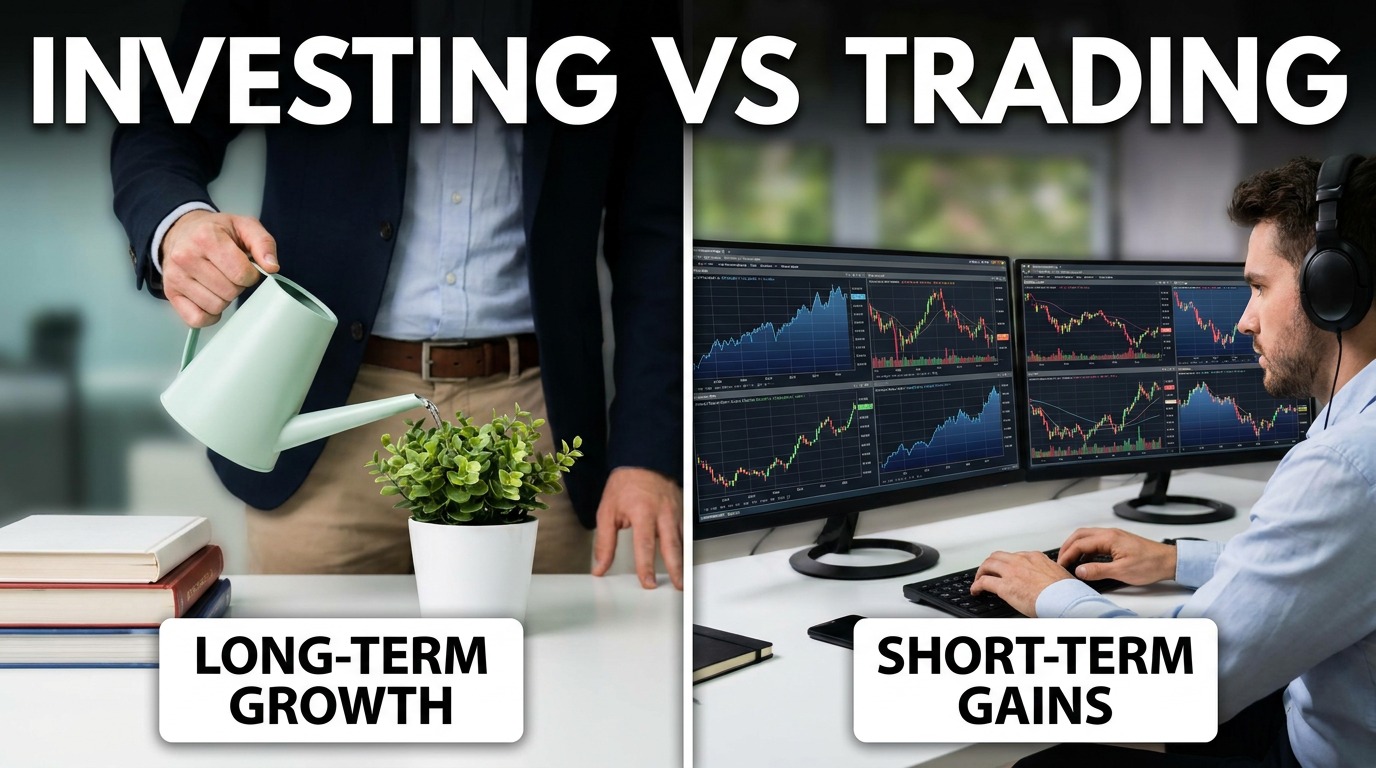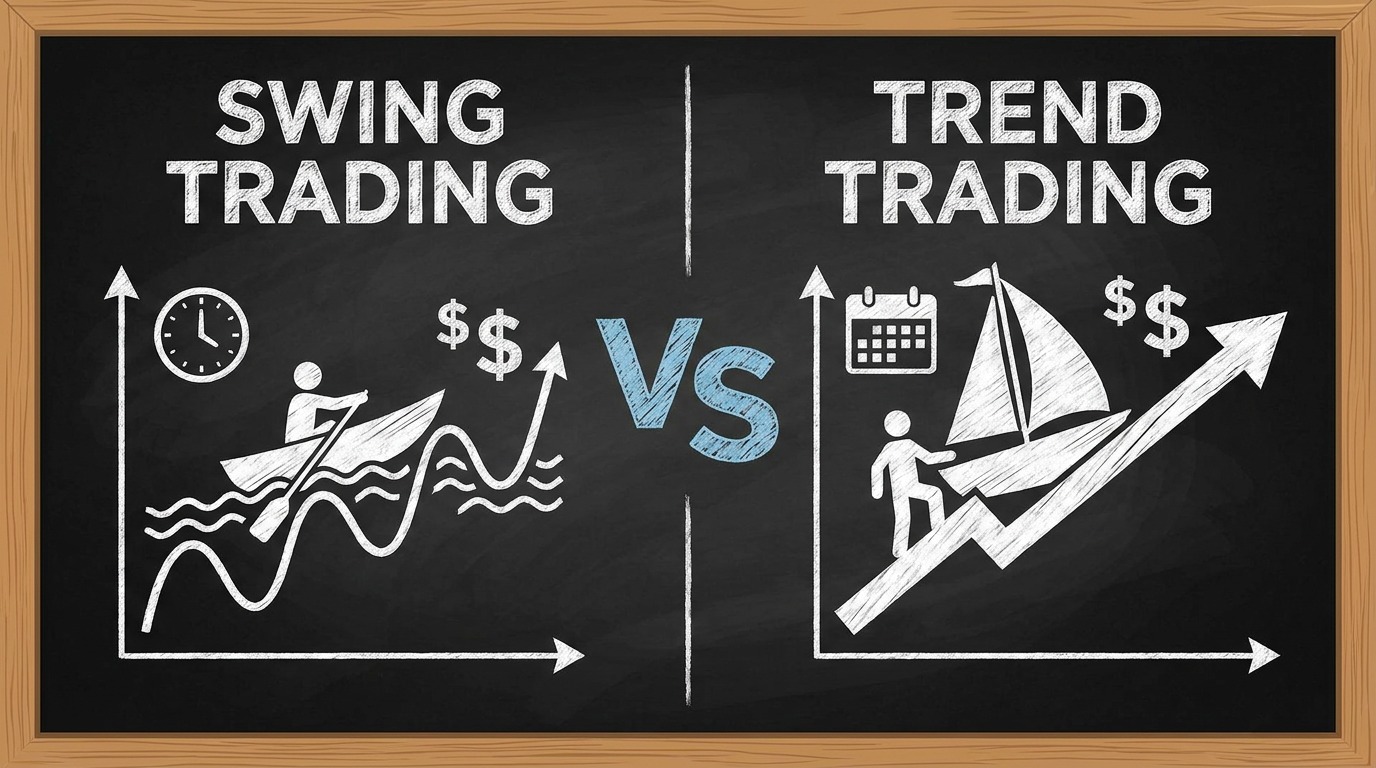
Real time swing trading is the use of live market data, alerts, chart updates and execution tools to manage trades that are usually held for more than one session. It sits between two extremes. On one side, there is end of day swing trading, where the trader checks charts after the close and places orders for the next session. On the other side, there is day trading, where entries and exits are made within the same session and the trader watches every tick like it owes them rent.
Swing trading itself usually aims to profit from short to medium term price moves lasting days or weeks. Investopedia describes swing trading as a style where positions are held for a few days or weeks to capture short to medium term profits in financial securities. Saxo gives a similar definition, describing swing trading as holding positions overnight or for several days or weeks rather than opening and closing trades within one session.
A trader using SwingTrading.com as a learning resource may already understand the broad idea: look for price swings, plan entries and exits, manage risk, then give the trade enough time to work. Real time swing trading does not change that foundation. It changes how the trader monitors and acts on the plan.
The important phrase is “acts on the plan.” Real time data should help a swing trader improve timing, manage risk and respond to genuine changes. It should not turn every price tick into a personal emergency. A swing trader who starts with a three day setup and exits because the five minute candle looked grumpy has not improved the strategy. They have just invited day trading chaos into a swing trading account.
Real time swing trading is therefore not faster swing trading. It is more informed swing trading. The edge still comes from setup quality, position sizing, market structure and patience. Live data simply gives the trader better tools to execute the plan.
Why Swing Trading Still Needs Live Market Awareness
Swing traders do not need to watch every tick, but they cannot ignore live conditions either. A trade held for several days can be affected by intraday volatility, news, sector rotation, broad market risk, earnings, economic data, liquidity changes and sudden order flow. End of day analysis can identify a setup, but real time information often decides whether the entry is sensible.
A swing trader looking at a stock breakout may plan to buy above resistance. At the open, the stock gaps sharply above the level on weak volume, then immediately reverses. An end of day trader may only see the final candle later. A real time swing trader can see the failed breakout as it happens and avoid entering at the worst point. That does not mean staring at a one second chart. It means having enough live awareness to avoid bad execution.
Real time awareness is also useful for risk events. Earnings dates, inflation reports, central bank decisions, product announcements and sector news can all change the character of a swing trade. A setup that looked clean last night may be less attractive if the company announces guidance changes before the open. Markets do not wait politely for the trader’s scheduled review time.
Technical conditions can also change during the session. A pullback to support may hold cleanly and attract buyers. It may also break hard on rising volume. A swing trader who waits until the close may still be fine, depending on the strategy. But a trader using live alerts can manage the trade more precisely, especially where stop levels or entry triggers are based on intraday price behaviour.
This is where real time swing trading differs from day trading. The swing trader is not trying to capture every intraday move. They are using intraday information to improve a multi-day decision. The trade thesis still lives on the higher timeframe. The real time data is the steering wheel, not the engine.
Real Time Data, Alerts and Execution
Real time swing trading depends on three tools: live price data, useful alerts and reliable execution.
Live price data matters because delayed data can distort entries and exits. A trader watching a delayed quote may think a stock is still near support when it has already broken down. A forex trader may think a pair is trading inside a range when the current bid and ask have already moved. A crypto trader may see old chart data while the exchange order book has changed. For swing trading, a few seconds may not always matter. Around breakouts, stops and news, they can matter plenty.
Alerts are more important than constant screen watching. A real time swing trader can set alerts at entry zones, stop levels, target areas, moving averages, prior highs, prior lows, volume thresholds and news events. This lets the trader focus on planned decisions rather than random movement. A good alert system is like a patient assistant. A bad one is a slot machine with notifications.
Execution matters because the entry price affects the whole trade. Swing trades often use wider stops than day trades, but bad execution still hurts reward to risk. If a trader plans to buy at $50 with a stop at $47 and target at $56, entering at $51.50 because of poor order handling changes the math. The trade may still look like the same idea, but the risk reward has been damaged.
Order types are part of that execution. A market order prioritises getting filled. A limit order controls price but may miss the trade. A stop order can trigger on momentum but may slip. A stop limit order can control price but may fail to execute in fast conditions. A bracket order can attach stop and target instructions at entry. None of these tools is perfect. The right order type depends on the setup, liquidity and urgency.
Real time swing traders should also understand bid ask spread. A liquid large cap stock may have a one cent spread. A small cap stock may have a wider spread. A thin crypto token may have a spread wide enough to make the chart look like it needs medical attention. Swing traders can ignore tiny spread differences on longer trades, but not when trading illiquid names or tight stop setups.
Building a Live Swing Trading Workflow
A real time swing trading workflow should begin before the market opens. The live session is not the time to invent a watchlist from scratch. That is how traders end up buying whatever is moving and then writing “lesson learned” in a journal for the 19th time.
The first step is market context. The trader checks index direction, major sectors, volatility, economic calendar, earnings calendar and overnight news. The goal is not to predict everything. It is to understand the kind of market the setup will face. A bullish breakout setup behaves differently in a strong market than it does in a weak index session with risk assets selling off.
The second step is watchlist preparation. A real time swing trader should begin the day with a list of planned names, entry zones, stop levels, targets and reasons for interest. This list may include stocks pulling back to support, markets consolidating near breakout levels, forex pairs near key levels, commodities forming reversal structures or crypto assets holding relative strength.
The third step is alert placement. Alerts should be placed around decision points, not random prices. A good alert says, “price is now near the planned entry area” or “the stop level is being tested” or “volume confirms the breakout.” A bad alert says, “something moved.” Everything moves. That is not useful.
The fourth step is entry confirmation. The trader watches whether price behaves properly around the planned area. If the plan is to buy a pullback, does support hold? Does volume dry up on the decline and expand on the bounce? If the plan is to buy a breakout, does price hold above the breakout area or immediately fail? Charles Schwab notes that volume can help confirm whether traders are committed to a price move, while falling volume can raise doubt about the strength of the move.
The fifth step is order placement. The trader should already know the order type before price reaches the entry zone. Hesitation often leads to worse fills. So does chasing. The plan should answer whether the trader uses a limit order, stop order, market order or staged entry.
The sixth step is trade management. Once in the trade, the trader monitors the higher timeframe structure. The question is not whether every intraday candle is green. The question is whether the original swing thesis remains valid. If the trade was based on a breakout, has the breakout held? If it was based on a support bounce, is support still respected? If it was based on momentum, is momentum still present?
The seventh step is review. At the end of the session, the trader records what happened. Did real time data improve the entry? Did alerts prevent bad decisions? Was the exit according to plan? Did the trader overreact to noise? This review is where real time swing trading becomes a process instead of a busy hobby.
Entry Timing Without Turning Into a Day Trader
The biggest risk in real time swing trading is style drift. The trader begins with swing setups, then starts acting like a day trader because live charts are addictive. Every tick becomes a signal. Every red candle becomes danger. Every green candle becomes confirmation. The plan disappears under the emotional confetti.
Good swing entry timing uses intraday data only to refine the original idea. It does not replace it.
For example, suppose a stock is in an uptrend and pulls back to the 20 day moving average. The swing thesis is that buyers may defend the pullback and push price toward the prior high. A real time trader might wait for intraday stabilisation, such as a higher low on the 30 minute chart, a reclaim of the morning high or rising volume on the bounce. That is valid timing. The trade still comes from the daily setup.
Now compare that with a trader who enters because the one minute chart prints three green candles, then exits five minutes later because the next candle is red. That is not refined swing trading. That is day trading with a longer apology.
A useful rule is to choose a decision timeframe and a trigger timeframe. The decision timeframe might be the daily chart. The trigger timeframe might be the 30 minute or hourly chart. The trader can use the trigger timeframe to improve entry, but the trade remains governed by the decision timeframe. The one minute chart is usually unnecessary for swing trading, unless the trader enjoys emotional cardio.
Breakout trades need special care. A real time swing trader may use a buy stop above resistance, but false breakouts are common. Waiting for price to break and hold, or using a partial entry, can reduce poor fills. The trade-off is that more confirmation often means a worse entry price. That is normal. Better information costs something.
Pullback trades have the opposite problem. The trader may want to buy near support, but support can fail. Real time confirmation helps avoid catching a falling knife. Waiting for buyers to appear may reduce risk, but again, the entry price may be higher than the theoretical low. The goal is not to buy the exact bottom. The goal is to buy a valid setup with defined risk.
Managing Open Swing Trades in Real Time
Open trade management is where real time tools can help, but also where they can create trouble.
A swing trade needs enough room to move. Intraday pullbacks are normal. A position that is meant to last several days should not usually be closed because it moved slightly against the trader during lunch-hour liquidity. If the stop is placed correctly, the stop defines the acceptable loss. Watching every tick does not make the stop smarter.
That said, real time monitoring can identify real changes. A stock may break a key level on heavy volume. A forex pair may reverse after central bank comments. A commodity may fail at resistance after inventory data. A crypto asset may lose support after exchange news. In those cases, live information can help the trader reduce risk before the end of day close, if the trading plan allows it.
Trailing stops are one way to manage a swing trade in real time. The stop may move below higher lows, below a moving average, or below a volatility-based level. Fidelity notes that swing traders often use technical setups and stop loss techniques to keep risk within acceptable limits. The key is to avoid tightening the stop too aggressively. A stop that follows every small move may turn a swing trade into a scalp.
Partial profit taking is another tool. A trader may sell part of the position at the first target, then let the rest run. This can reduce emotional pressure. It can also reduce total profit if the trade continues strongly. Like every trading decision, it is a trade-off. Anyone claiming one method is always best is probably selling a course with a beach background.
Real time alerts can also protect profits without forcing constant watching. A trader can set alerts at target zones, trailing stop levels, earnings dates, gap levels or volume spikes. This keeps attention on meaningful events rather than noise.
The best question for managing open swing trades is: has the reason for the trade changed? If the answer is no, live fluctuations may not matter. If the answer is yes, the trader should act according to the plan, not according to panic.
Common Mistakes in Real Time Swing Trading
The first mistake is overmonitoring. Real time data can create the illusion that every movement requires action. Swing trading usually rewards patience. Watching a trade too closely can turn normal volatility into emotional pressure. Some traders do better by setting alerts and walking away. Radical stuff, but it works.
The second mistake is chasing entries. A trader plans to buy at $40, misses the entry, then buys at $43 because the chart is moving. The setup may still work, but the stop and target are now different. If the trader keeps the old stop and target, the risk reward is worse. Chasing is how good ideas become bad trades.
The third mistake is moving stops without reason. A stop should be placed where the trade thesis is invalidated. Moving it lower because price is approaching it is not risk management. It is negotiation with a line on a screen.
The fourth mistake is using intraday noise to override daily structure. If the swing setup is based on the daily chart, a five minute pullback should not usually decide the trade. Small timeframes can help with entries, but they can also bully the trader into exiting too early.
The fifth mistake is ignoring liquidity. Real time charts can look active even when spreads are poor and depth is thin. Swing traders should check average volume, spread, market cap and normal volatility before entering. A stock that moves beautifully on a chart may be difficult to exit at size.
The sixth mistake is trading too many alerts. A trader can set alerts on 80 instruments and then spend the day reacting to noise. A focused watchlist is usually better. More alerts do not mean more edge. Sometimes they just mean more interruptions.
The seventh mistake is confusing speed with quality. A fast decision is not always a good decision. Real time swing trading should make execution cleaner, not impulsive. If live data causes more trades, bigger losses and worse discipline, the trader does not have a data problem. They have a behaviour problem.
Tools and Broker Features That Matter
A real time swing trader needs a platform that supports the workflow rather than distracts from it.
Real time quotes are the starting point. Delayed data can be acceptable for broad research, but not for live entries or exits. Charting should be stable, with multiple timeframes, drawing tools, watchlists and indicator support. The platform should also allow alerts based on price, percentage movement, volume and technical levels.
Order types matter too. Swing traders should have access to limit orders, stop orders, stop limit orders, bracket orders and trailing stops where available. A broker that makes stop placement clumsy is not ideal for live swing management.
Mobile tools can help, especially for traders who cannot sit at a desktop all day. A good mobile app should show positions, alerts, charts, orders and account risk clearly. It should not hide the exit button behind five menus and a motivational banner.
Execution quality matters, even for swing traders. A swing trader may not need ultra-low latency, but they still need fair fills, reliable order handling and clear trade confirmations. Investopedia notes that swing traders often rely heavily on technical analysis for entry and exit decisions, which makes execution around planned levels important.
Finally, the broker should provide usable reporting. A real time swing trader needs to review entries, exits, holding time, slippage, average win, average loss and setup performance. If the platform makes review difficult, the trader may keep repeating mistakes with great confidence. Markets already provide enough lessons. No need to retake the same one every week.