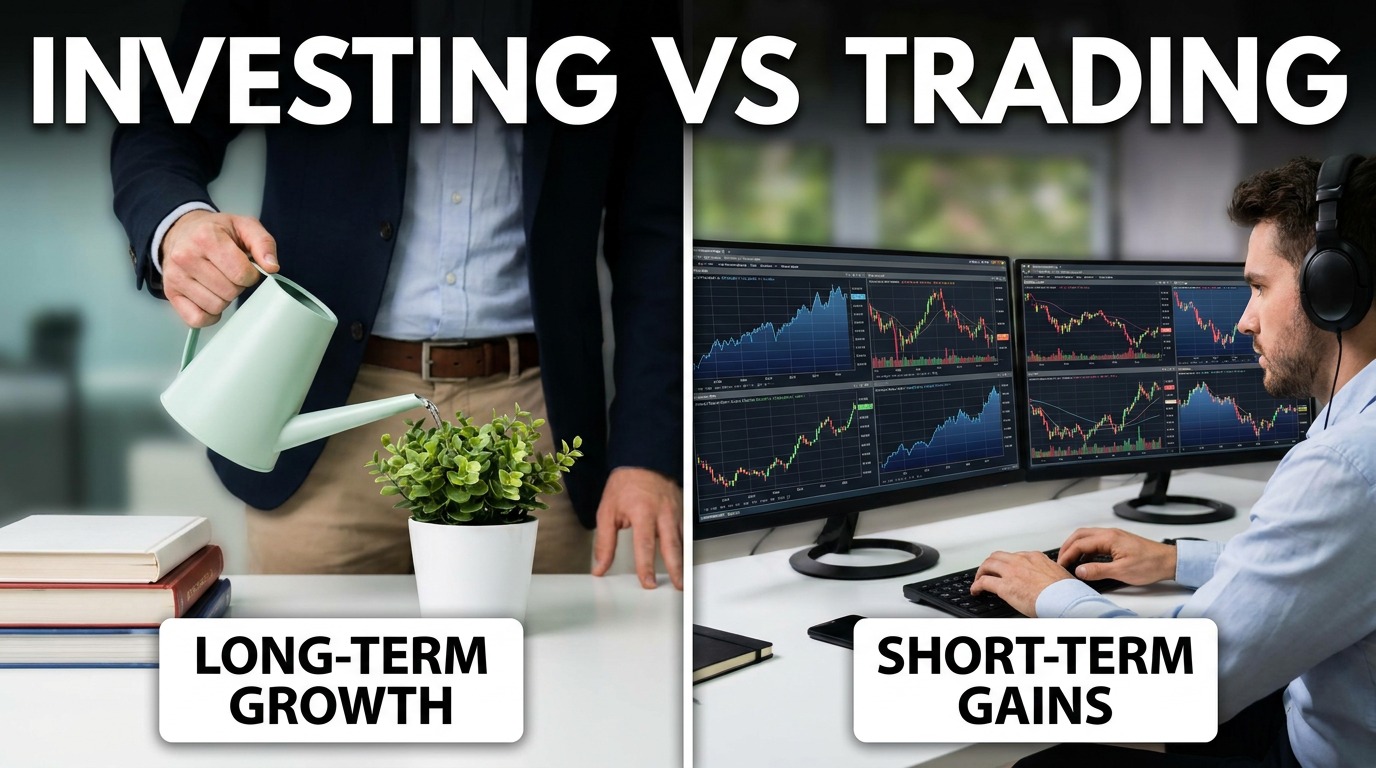
Real time trading and investing both involve buying and selling financial assets, so they are often thrown into the same bucket. That bucket is not very helpful.
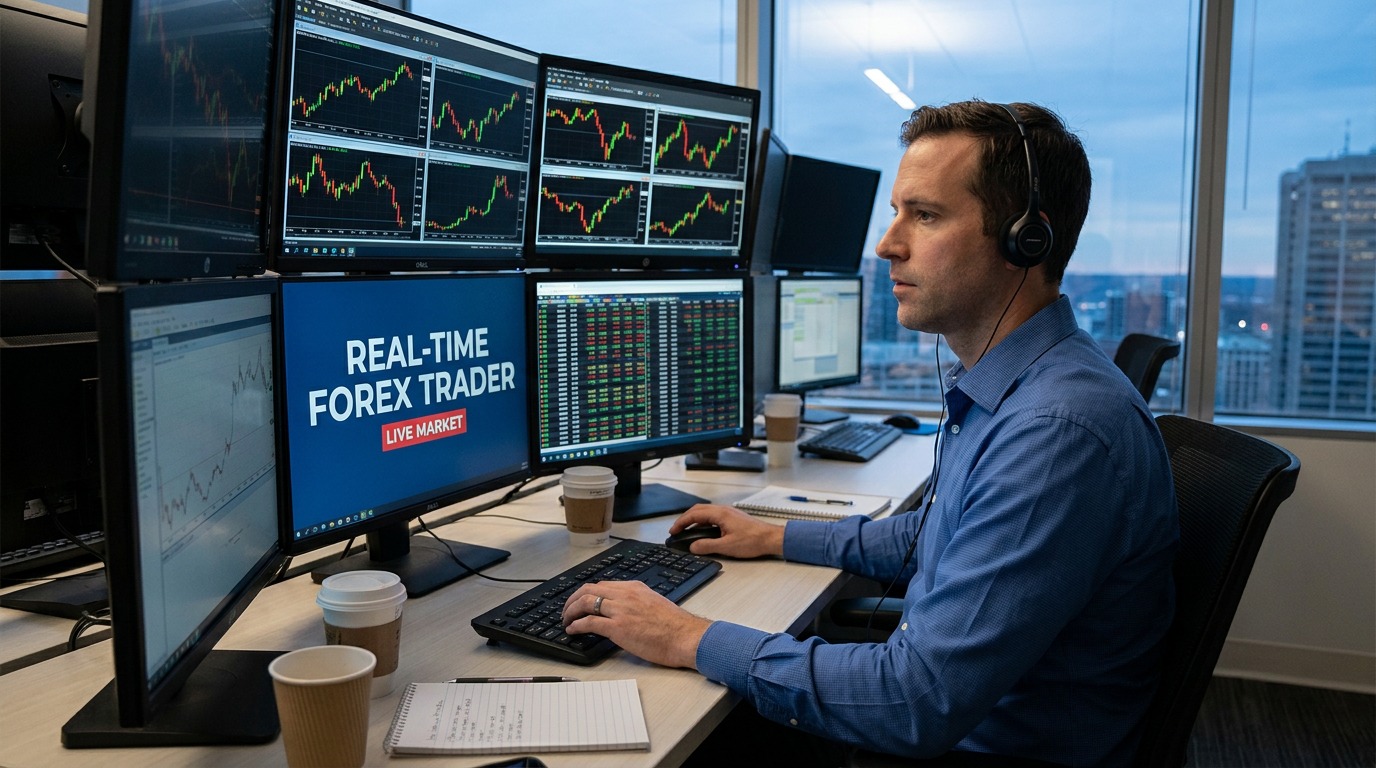
A real time trader is usually trying to profit from shorter-term price movement. The trader watches live prices, reacts to changing market conditions, places orders during active sessions and manages risk around entries, exits and volatility. The focus is timing.
An investor is usually trying to build wealth over a longer period. The investor buys assets because they expect value, income, growth or diversification over years. The focus is ownership, patience and compounding.
That difference sounds obvious until someone opens a trading app. Modern platforms make both activities look similar. A person can buy a stock for retirement, then sell it 10 minutes later because the candle went red. Another can call themselves an investor while checking every tick like they are defusing a bomb. The platform does not care what the user intended. It just shows buttons.
Research and market education sites such as Investing.co.uk can help users compare financial topics, markets and platforms. The harder part is deciding what role each account should play. A trading account and an investment account should not have the same rules, time horizon or emotional pressure.
Real time trading asks, “Can I manage this price move now?”
Investing asks, “Does this asset fit my long-term plan?”
Those are different questions. Mixing them is how people buy as investors, panic as traders and sell as comedians.
What Real Time Trading Is Built to Do
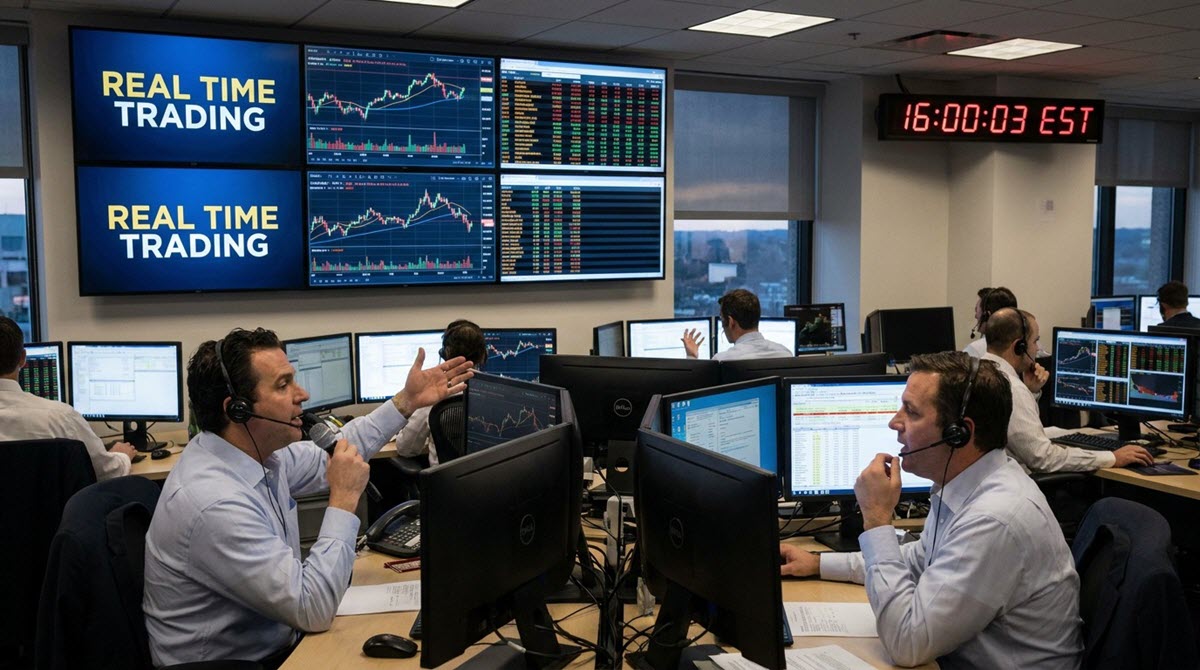
Real time trading is built around live decision-making. The trader uses current prices, order books, charts, news, alerts and platform tools to enter and exit positions. The holding period may be seconds, minutes, hours or days, depending on the strategy. The common thread is active management.
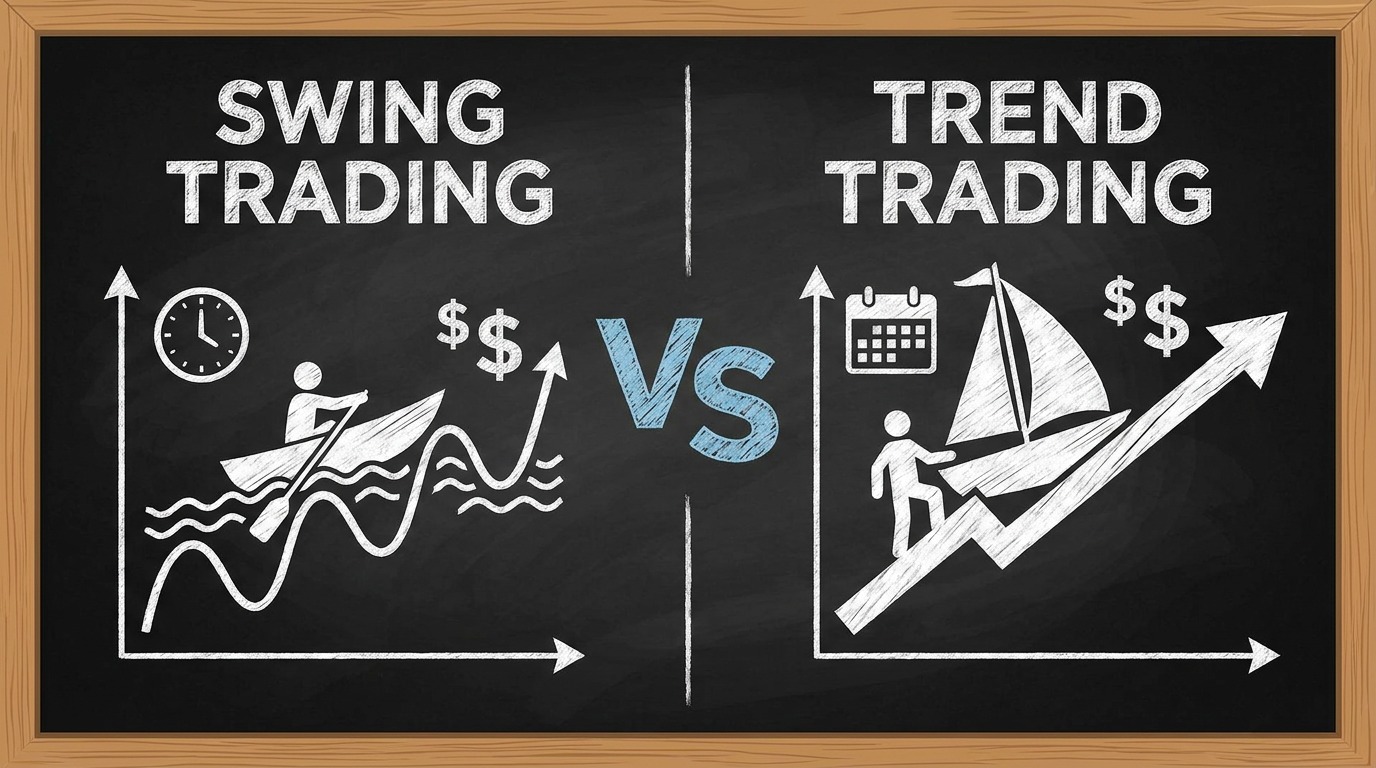
A day trader may buy and sell within the same session. A scalper may take very short trades around small price moves. A swing trader may use real time alerts to time entries, then hold for several days. A forex trader may react to central bank comments. A futures trader may manage positions around economic releases. These are not identical styles, but all depend on timely information and execution.
The trader’s edge, if one exists, usually comes from timing, discipline, execution quality, risk control and repeatable setups. Real time trading is not just “being online while prices move.” It requires a plan for entry, invalidation, position size, order type and exit. Without those parts, live trading becomes expensive button pressing.
Active trading also has a narrower error margin. A poor entry can damage the whole trade. A delayed fill can change reward-to-risk. A wider spread can turn a good setup into a mediocre one. A platform outage can trap the trader. Live conditions matter because the trader is acting inside them.
FINRA says frequent intraday trading comes with risks, especially where margin is used, including the risk of losing some or all of the investment. FINRA’s day-trading risk disclosure also says day trading can be extremely risky and is generally not appropriate for someone with limited resources, limited trading experience or low risk tolerance.
That warning does not mean every active trader is reckless. It means real time trading is operationally demanding. The trader must be right not only about direction, but also about timing, size, costs, liquidity and behaviour. That is a lot of ways to be wrong before lunch.
What Investing Is Built to Do
Investing is built around time, ownership and compounding.
An investor usually buys assets such as shares, funds, bonds, investment trusts, ETFs or other long-term holdings because they want exposure to future returns. Those returns may come from earnings growth, dividends, interest, capital gains, reinvestment or broad economic growth. The investor does not need to be right about the next five-minute candle. They need the asset allocation and time horizon to make sense.
This is why investing usually begins with goals. Retirement, house deposit, children’s education, future income, financial independence and inflation protection are investment goals. “I want to make something happen today” is not an investment goal. It is a mood.
Long-term investing also accepts that markets will fluctuate. Prices can fall for months or even years. That does not automatically break the plan if the investor has enough time, diversification and suitable risk exposure. Short-term losses still hurt, but the investor is not trying to exit every dip. They are trying to stay aligned with a longer plan.
The FCA says investing over a longer time frame, such as at least five years, can help offset short-term fluctuations in investment performance. Its InvestSmart material also urges investors to understand risk and returns before putting money into the market.
Compounding is a major reason time matters. Investor.gov describes compound interest as interest paid on principal and accumulated interest, and provides a calculator to show how money can grow through compounding.
A trader tries to make decisions better. An investor tries to make time useful. Both can work, but they need different rules. An investment account should not be managed like an intraday trading account. Checking a pension fund every 10 minutes is not diligence. It is turning long-term wealth into live entertainment, and not even good entertainment.
Time Horizon and Decision Speed
The biggest difference between real time trading and investing is time horizon.
Real time trading operates on short feedback loops. The trader may know within minutes whether the trade is working. Even swing trades, which can last days or weeks, often involve precise entry zones and active risk management. The trader makes frequent decisions and judges setups by shorter-term price behaviour.
Investing uses longer feedback loops. The investor may not know for years whether an allocation was good. A diversified equity fund can fall after purchase and still be a sound long-term holding. A good company can have a poor quarter. A bond fund can suffer during rate changes and later recover. The investor needs patience because the thesis is not tested by one session.
Decision speed changes behaviour. Real time trading rewards preparation before action. The trader should know the setup before price reaches the level. They should know the stop before entering. They should know the position size before emotion gets involved. A fast market is a bad place to start thinking from scratch.
Investing rewards slower judgment. The investor has time to compare funds, fees, tax wrappers, asset allocation, risk tolerance and goals. They do not need to buy because a price just flashed green. In fact, one of the benefits of investing is that it should reduce the number of forced decisions.
The problem appears when people borrow the wrong habits.
A trader who acts with investor patience may hold losing trades too long and call it conviction. An investor who acts with trader urgency may sell a long-term position because of one ugly session. Both have broken their own game.
A useful test is this: before entering any market position, decide whether it is a trade or an investment. If it is a trade, define exit rules. If it is an investment, define time horizon and portfolio role. If neither can be explained, it is probably just a click with a story attached.
Risk, Costs and Execution
Real time trading and investing both carry risk, but the type of risk is different.
In real time trading, execution risk is central. The trader cares about entry price, spread, slippage, order type, speed, liquidity and stop placement. A trader using market orders in fast conditions may get filled away from the expected price. A trader using limit orders may avoid bad prices but miss fills. A trader using stops may suffer slippage during gaps. None of this is theoretical. It shows up directly in the trade result.
Best execution rules reflect these concerns. The FCA’s COBS 11 rules say firms must take all sufficient steps to obtain the best possible result for clients, taking into account price, costs, speed, likelihood of execution and settlement, size, nature and other relevant factors.
For an investor, execution still matters, but it usually matters less than allocation, fees, diversification and behaviour. A long-term fund investor buying once per month is less affected by a one-second delay than a scalper trading around a breakout. The investor’s bigger risks are poor asset selection, high fees, lack of diversification, panic selling, unsuitable products and investing money needed too soon.
Costs also behave differently.
A real time trader may pay through spreads, commissions, platform fees, market data fees, financing, exchange fees, margin interest and tax. Frequent trades make small costs important. A £5 cost may look minor, but if it appears hundreds of times, it becomes a silent business partner with poor manners.
An investor also pays fees, but often in the form of fund charges, platform fees, dealing charges, advice fees, spreads and tax. Since investors usually trade less often, ongoing fund costs and platform charges can matter more than single trade speed.
Leverage is another dividing line. Real time traders may use margin, CFDs, futures, forex leverage or options. Leverage can improve capital efficiency but also magnifies losses. Investors may also use leverage, but many long-term investors avoid it because time and leverage can have a complicated relationship. Borrowed money is patient until it suddenly is not.
Risk in trading is often immediate. Risk in investing is often slower. Do not confuse slower with safer. A long-term investment can still lose money. It just usually gives the owner more time to make bad decisions about it.
Data, Tools and Attention Required
Real time trading needs live tools. The trader may need real-time quotes, charts, depth of market, news feeds, volatility measures, economic calendars, alerts, hotkeys, advanced order types and strong platform uptime. If the platform freezes during the exact moment the trader needs to exit, the strategy has a software problem, not just a market problem.
The trader also needs attention. Not constant panic, but focused monitoring. A day trader cannot disappear for six hours after opening a leveraged position. A futures trader cannot ignore a major data release. A forex trader cannot pretend spread widening at rollover is irrelevant. Real time trading requires being present when the trade demands it.
Investing needs different tools. The investor needs portfolio allocation tools, fund factsheets, fee comparisons, tax account information, dividend records, retirement calculators, risk questionnaires and periodic review. Real-time charts may be interesting, but they are rarely the main tool.
This is one reason investing is more scalable for many people. A person with a full-time job, family and limited market time may be able to invest sensibly using regular contributions and periodic reviews. The same person may struggle to trade real time during working hours. Trading is not only a financial activity. It is a time commitment.
Real time trading also creates more emotional data. The trader sees every tick, every unrealised gain, every small loss and every near miss. That information can help skilled traders. It can also trigger overreaction. More data does not always mean better decisions. Sometimes it just gives anxiety a dashboard.
Investing reduces noise by design. A long-term investor can check holdings monthly, quarterly or annually depending on the plan. That slower review cycle helps prevent unnecessary action. Boring is not a flaw here. Boring is often the point.
Which Approach Suits Which Person
Real time trading may suit someone who has time, discipline, risk capital, a tested process and emotional control. It may also suit people who enjoy active markets and can make decisions without turning every loss into a personal insult.
It is less suitable for people who need guaranteed income, trade with rent money, cannot control position size, chase losses, or panic when prices move quickly. Real time trading punishes weak process. It also punishes tiredness, distraction and arrogance. Efficient little machine.
Investing may suit people who want long-term exposure to markets, can tolerate fluctuations, prefer fewer decisions and have clear financial goals. It can fit people building retirement savings, using tax-efficient accounts, contributing regularly or trying to grow wealth over years.
It is less suitable when money is needed soon, when the investor does not understand the product, or when the asset is too risky for the person’s situation. A long-term label does not make a bad investment good. Holding nonsense for five years is still nonsense, just with a birthday.
Personality matters. Some people love active decision-making and can handle trading pressure. Others perform better with a slower plan. Some can do both, but only if they separate accounts and rules.
The worst fit is the person who wants trading returns with investment effort. Real time trading requires work. Investing requires patience. Wanting fast money with low attention is how people end up in signal groups, fake platforms and “guaranteed return” nonsense wearing a suit.
How Traders Can Also Invest
A trader does not have to choose only one path. Many traders should do both.
Trading can be used as active risk capital. Investing can be used as long-term wealth capital. The two accounts should have different purposes. The trading account funds setups. The investment account builds net worth away from short-term decisions.
One practical method is a profit sweep. When the trading account is above its required operating level, part of the profit is moved into long-term investments. This prevents every winning period from becoming larger trading size. It also turns some trading success into assets that are not exposed to the next bad week.
The split does not need to be dramatic. A trader might move 20%, 30% or 50% of net monthly trading profits into long-term holdings, depending on tax, income and account size. The exact number matters less than the habit. Profit that never leaves the trading account is still vulnerable to the trader’s next mistake.
An investor can also keep a small trading account for active ideas while leaving the main portfolio alone. This is often healthier than turning the entire investment account into a playground. If someone wants to trade, fine. Just do not let a short-term mood rewrite a long-term plan.
The rule is simple: trade with money assigned to trading, invest with money assigned to investing, and do not let one account raid the other after a bad decision.